
In today’s competitive marketplace, cabinet shops face mounting pressure to control costs while meeting growing consumer demand for sustainable practices. The good news? Energy efficiency delivers on both fronts. By strategically reducing your shop’s energy consumption, you’ll shrink your carbon footprint, slash utility bills, and position your business as a forward-thinking leader in sustainable craftsmanship.
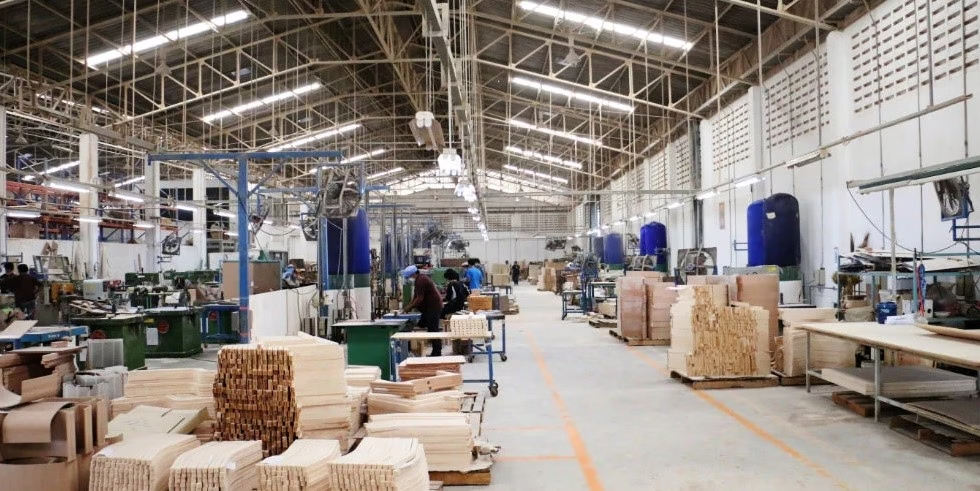
Lighting: The Low-Hanging Fruit
Lighting typically accounts for a significant portion of a workshop’s energy usage, making it the ideal starting point for efficiency improvements. Traditional fluorescent fixtures are energy hogs that demand frequent replacements and disposal of hazardous materials. LED technology offers a compelling alternative, using up to 70% less power while delivering superior light quality that enhances precision work.
Beyond the energy savings, LEDs produce less heat—a meaningful benefit in workshops where climate control costs can spiral. They last 25,000 to 50,000 hours compared to fluorescent bulbs’ 7,000 to 15,000 hours, dramatically reducing maintenance interruptions and replacement costs. When you factor in the time saved climbing ladders to change bulbs in high-bay fixtures, the value proposition becomes even stronger.
Take your lighting strategy further by installing motion sensors in storage areas, restrooms, and infrequently accessed spaces. These simple devices prevent lights from running unnecessarily during lunch breaks or after hours. Pair them with daylight harvesting systems that automatically dim artificial lighting when natural light is abundant. The combined effect can reduce lighting costs by an additional 30-40%.
Climate Control: Smart Temperature Management
Heating and cooling a large workshop space represents one of the biggest energy expenses for cabinet makers. Smart thermostats offer precise control that traditional systems can’t match. These devices learn your schedule, adjusting temperatures automatically when the shop is empty and ensuring optimal conditions before your team arrives.
Consider establishing temperature zones within your facility. Your finishing area may require different conditions than your assembly space or lumber storage. Zone-based climate control prevents you from heating or cooling the entire building to accommodate one area’s specific needs. Programmable setbacks during non-production hours can reduce HVAC energy consumption by 20-30% without compromising comfort or material storage conditions.
Don’t overlook the basics: proper insulation, weatherstripping around doors, and regular HVAC maintenance. A well-sealed building envelope keeps conditioned air where it belongs, while clean filters and tuned equipment operate more efficiently. Schedule professional HVAC inspections at least annually to catch issues before they become expensive problems.
Equipment Upgrades: The Power Behind Your Productivity
Modern dust collection systems, air compressors, and cutting equipment incorporate energy-saving technologies that weren’t available just a decade ago. Variable frequency drives (VFDs) on dust collectors adjust motor speed to match actual demand rather than running at full capacity constantly. This single upgrade can reduce dust collection energy costs by 30-50%.
Air compressors deserve special attention since they’re among the most inefficient equipment in any shop. Leaks in compressed air systems waste an estimated 20-30% of generated air in typical facilities. Implement a regular leak detection and repair program—the investment pays for itself quickly. Consider upgrading to high-efficiency rotary screw compressors with VFD controls, and rightsize your system to avoid the inefficiency of oversized equipment cycling on and off.
Your primary woodworking equipment also impacts your energy footprint. When replacing saws, routers, or CNC machines, compare energy specifications alongside performance features. Modern equipment often delivers better cuts with less power, thanks to improved motor technology and optimized blade designs. Establish preventive maintenance schedules to keep all equipment operating at peak efficiency—dull blades and worn components force motors to work harder, spiking energy use and accelerating wear.
The Product Itself: Cabinets That Keep On Giving
Your craftsmanship doesn’t just serve clients during installation—it influences their home’s energy efficiency for years to come. Cabinets designed with integrated thermal breaks and insulated backing panels contribute to a home’s overall envelope performance, particularly in kitchens with exterior walls. While the effect might seem modest per cabinet, the cumulative impact across an entire kitchen installation can measurably reduce heating and cooling loads.
Glass-fronted cabinet doors serve double duty beyond aesthetic appeal. They allow homeowners to locate items without opening doors repeatedly, and they reflect and transmit natural light throughout the space. This passive illumination reduces reliance on artificial lighting, especially in deeper kitchen areas away from windows. Consider offering low-E glass options for cabinets in sun-exposed areas to minimize heat gain while maintaining visibility.
Interior cabinet lighting has evolved beyond simple incandescent strips. LED tape lighting with motion sensors provides on-demand illumination that uses a fraction of the energy traditional systems consume. Battery-powered options eliminate the need for hardwiring, reducing installation complexity while maintaining efficiency. When you spec these features into your designs, you’re adding measurable value that resonates with energy-conscious homeowners.
Renewable Energy: Thinking Beyond the Grid
Solar installation costs have declined dramatically, making renewable energy accessible for many cabinet shops. A properly sized solar array can offset 50-100% of your electricity consumption, insulating your business from utility rate increases while demonstrating environmental commitment. Ground-mounted or rooftop systems work for most facilities, with federal and state incentives often covering 30-50% of initial investment.
Start smaller with solar-powered tools and battery charging stations. Portable solar panels can maintain battery packs for cordless tools, reducing grid dependency for frequently used equipment. Some shops have successfully deployed solar arrays specifically for dust collection or climate control—systems with consistent, predictable energy demands that align well with solar production patterns.
Battery storage systems paired with solar generation offer additional benefits beyond simple grid offset. They provide backup power during outages, ensuring you won’t lose production time when the grid fails. Time-of-use rate structures in many regions mean batteries can store electricity during low-cost periods and discharge during expensive peak hours, optimizing your utility spend even without solar panels.
Marketing Your Green Credentials
Energy efficiency improvements shouldn’t remain hidden behind your shop walls. Today’s consumers increasingly factor environmental considerations into purchasing decisions, and your sustainable practices offer powerful differentiation from competitors. Document your journey with before-and-after utility bills, equipment upgrade photos, and carbon footprint calculations.
Create a dedicated section on your website highlighting your energy initiatives. Include specifics—numbers resonate more than vague environmental claims. “We’ve reduced our electricity consumption by 40% since 2020” tells a more compelling story than “We care about the environment.” Share details about the sustainable materials you work with, your waste reduction strategies, and how your products contribute to clients’ home efficiency.
Consider third-party certifications that validate your environmental commitment. Programs like Green Business Certification or Energy Star partnership add credibility to your sustainability claims. Display certificates in your showroom and include logos on marketing materials. These designations signal to environmentally conscious clients that your commitment extends beyond marketing rhetoric.
The Bottom Line: Investment That Pays
Every dollar spent on energy efficiency generates returns through reduced operating costs, equipment longevity, and enhanced market positioning. Most lighting and control system upgrades pay for themselves within two to four years through utility savings alone. Equipment improvements often deliver faster payback by reducing maintenance costs alongside energy consumption.
Start with an energy audit to identify your biggest opportunities. Many utility companies offer free or subsidized assessments that pinpoint where you’re losing money. Prioritize improvements by payback period, tackling quick wins first to generate capital for larger investments. Track your progress with baseline utility data and celebrate milestones with your team—energy efficiency succeeds when everyone understands their role.
The cabinet industry stands at the intersection of traditional craftsmanship and modern sustainability. By embracing energy efficiency, you’re not abandoning the values that built your business—you’re ensuring those values carry forward into a marketplace that increasingly demands environmental responsibility alongside exceptional quality. Your investment in efficiency today builds a stronger, more resilient business for tomorrow while demonstrating to clients that your commitment to excellence extends beyond the products you create to how you create them.